Consumer Electronics
Consumer Electronics Trends for 2026: Industry Evolution
Consumer Electronics Trends for 2026: Industry Evolution
Consumer Electronics Trends for 2026: Industry Evolution

Rustam Ulmataiev
Senior Android Software Engineer
•
8 minutes to read
Consumer Electronics Trends for 2026: Industry Evolution
After decades of smartphone dominance, there’s a fundamental shift in how we interact with consumer electronics. Spatial computing is moving from science fiction to everyday reality, AI is migrating from cloud servers to our wearables, and our homes are transforming into intelligent environments.
For technology leaders, product developers, and investors, understanding these shifts is essential to recognizing the foundational changes reshaping the industry. To save you some time on research, we’ve gathered some of the most influential consumer electronics trends for 2026 here.
Trend #1: The Shift from Smartphones to Spatial Computing
While phones remain our primary devices, the industry is transitioning toward computing that surrounds users in physical space rather than being confined to handheld rectangles.
Smart Eyewear Goes Mainstream
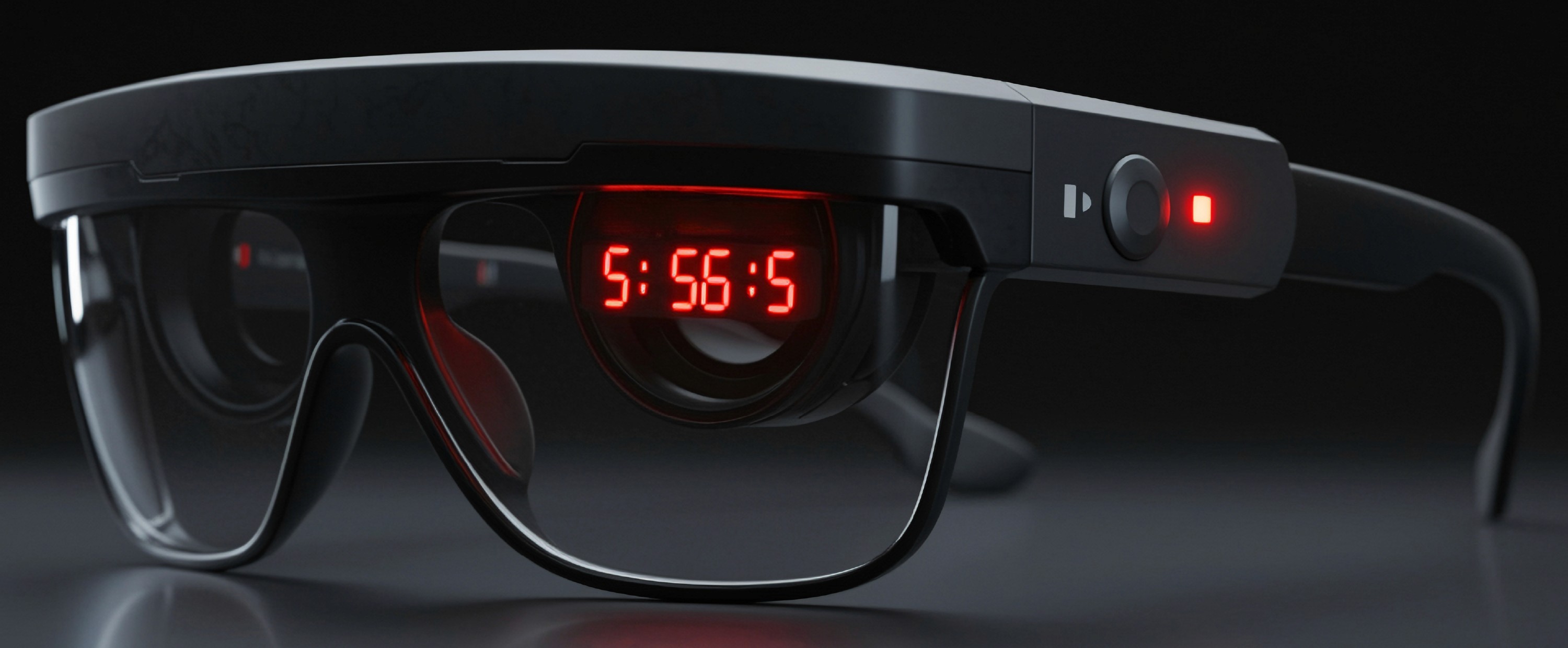
Smart eyewear is experiencing its breakout moment, evolving from niche curiosity to legitimate mainstream wearables category. Multi-modal AI glasses equipped with cameras, microphones, and advanced processors are redefining how we access information. Omdia forecasts shipments reaching 10 million units in 2026 — a tenfold increase from just two years prior.
The XREAL One Pro exemplifies this evolution. Unlike earlier attempts at smart glasses that looked conspicuously technical, these devices resemble standard eyewear while projecting high-resolution virtual displays. Users can watch movies on virtual 120-inch screens, work on multiple virtual monitors, or navigate cities with turn-by-turn directions overlaid on the real world.
Meta's collaboration with Qualcomm on the Snapdragon AR1 platform is accelerating adoption. This partnership is enabling a new generation of lightweight, all-day wearable devices that can run sophisticated AI models locally without draining batteries in hours.
Computing Becomes Environmental
Ambient interfaces are transforming everyday surfaces into interactive digital displays. The concept is simple but profound: instead of bringing physical objects to screens, we bring screens to physical objects.
Apple's Vision Pro 2 represents the premium end of this market, projecting crisp virtual screens that appear to float in physical space. Users can arrange multiple virtual displays around their workspace, resize them at will, and interact using eye tracking and hand gestures. While the $3,499 price point limits mass adoption, the technology demonstrates where spatial computing is heading.
Automotive integration shows how spatial computing enters mainstream consumer experiences. Modern windshields are becoming augmented reality displays, projecting navigation arrows that appear to float on the actual road ahead. BMW and Mercedes-Benz are leading this integration, with systems that use head-up display technology combined with eye-tracking.
AI Hearables Evolution
AI hearables are transforming from passive audio devices into intelligent companions that sense, interpret, and respond to the world around users. These aren't just upgraded earbuds — they're sophisticated computing platforms packed with microphone arrays, advanced speakers, ultrasound sensors, and AI processing.
Modern hearables deploy multiple microphones in arrays that enable spatial awareness through beamforming. They can detect the direction of incoming sound, isolate individual speakers in a crowd, or determine the user's position in a room. This directional intelligence creates context-aware experiences where devices understand not just what was said, but where it was said and by whom.
As an example, Bragi, one of our clients, provides solutions that transform standard headphones into connected, intelligent products. Brightgrove is contributing to this project by developing a tech solution that integrates Bragi’s software into third-party headphones from brands like Bose or Skullcandy. Through this integration, hardware with no previous AI capability becomes smart. The device captures audio signals via the microphone and routes them to a Large Language Model (LLM) that responds directly to the user's inquiry. For example, if a user wants to buy a new laptop and asks their headphones for assistance, the device provides tailored guidance in real-time.
AI-enhanced signal processing takes this further. Hearables can now augment desirable environmental sounds or selectively cancel unwanted noise in real-time. This goes beyond conventional active noise cancellation to create adaptive soundscapes — boosting a colleague's voice in a noisy office or quieting distractions without complete isolation.
Trend #2: Edge AI Bringing Intelligence to the Device Level
Processing power is moving from remote data centers to the devices themselves, enabling real-time decision-making, enhancing privacy, and reducing connectivity dependence.
Intelligence at the Sensor Level
Smart sensors with dedicated AI processors are delivering instant analysis at the device level. These aren't simple data collectors — they're intelligent systems capable of sophisticated decision-making independently.
Amazon's Echo Show 10 demonstrates this evolution. The device uses local computer vision and motion processing to autonomously track and follow users around a room, keeping the screen oriented toward them during video calls or while following recipes. This processing happens entirely on-device — no video streams to the cloud, ensuring privacy while delivering instant responsiveness.
Google's Nest cameras employ edge AI to distinguish between people, animals, and vehicles, sending relevant alerts without uploading constant video streams. The system learns what's normal for your property and only flags genuinely unusual activity.
Physical AI Embedding Intelligence Everywhere
Physical AI represents the next frontier: intelligence embedded into real-world objects through autonomous devices and robots that understand and navigate physical space. This goes beyond screen-based interactions to systems that physically manipulate environments.
Smart home networks now use edge sensors to adapt lighting and climate based on learned patterns. These systems don't just respond to programmed schedules — they learn that you prefer dimmer lights when watching evening TV, that bedroom temperature should drop 30 minutes before your typical bedtime, or that the living room should warm up before your usual morning coffee time.
Boston Dynamics' Spot robot and similar platforms use edge AI for real-time navigation and manipulation in unstructured environments. These systems process sensor data locally to make split-second decisions about movement and interaction.
AI as Purchase Driver
Consumer awareness of AI capabilities has reached critical mass, with AI features now ranking among the top five drivers for wearable purchases. Manufacturers are responding by making AI functionality central to product positioning.
The Circular Ring 2 and Samsung Galaxy Ring market AI health analytics as primary selling points, not secondary features. These devices use on-device machine learning to analyze heart rate variability, sleep stages, activity patterns, and stress indicators. The AI doesn't just report what happened — it predicts what might happen and recommends preventive actions.
This shift reflects broader consumer sophistication. Early wearables competed on sensor count. Modern devices compete on insight quality — how intelligently can collected data be interpreted and acted upon.
Trend #3: Wearables Evolving into Ambient Intelligence Platforms
Wearable devices are expanding far beyond fitness trackers: they're becoming comprehensive health monitors and always-available AI assistants.
Comprehensive Health Monitoring
Health monitoring in wearables has evolved from step counting to clinical-grade biometric tracking. Modern smartwatches and rings track heart rate variability, blood oxygen saturation, skin temperature, respiratory rate, and even estimate blood pressure and glucose levels.
Apple Watch's ECG and irregular rhythm notifications have identified atrial fibrillation in users who had no idea they had a potentially serious heart condition. The FDA has cleared several of these features as medical devices, validating their clinical utility.
The Circular Ring 2 uses AI for sleep staging — distinguishing between light, deep, and REM sleep phases — and stress detection based on heart rate variability patterns. More importantly, it provides predictive wellness recommendations: suggesting rest days before overtraining injuries occur, identifying early signs of illness before symptoms appear, or detecting elevated stress levels before they impact health.
Contextual Environmental Awareness
Ambient awareness represents wearables' evolution into environmental intelligence systems. AI-equipped devices with optics and microphones continuously listen to and analyze surroundings, providing contextual guidance and real-time assistance.
Real-time translation earbuds have matured from clunky prototypes to practical communication tools. Google Pixel Buds and similar devices translate conversations in real-time. This enables natural conversations between people speaking different languages without the awkward delays of early systems.
These capabilities raise important privacy questions. Devices that constantly record and analyze surroundings create surveillance concerns that manufacturers are addressing through local processing, temporary data storage, and explicit user controls.
Miniaturization Enabling New Form Factors
Miniaturization advances through MEMS (Micro-Electro-Mechanical Systems) technology are enabling thinner, lighter components. This isn't just about making existing devices smaller — it's enabling entirely new categories of wearables.
Advanced waveguides and photonics allow AR displays to be integrated into glasses indistinguishable from regular eyewear. Earlier AR glasses were bulky and conspicuous. Modern versions using micro-LED projectors and holographic waveguides achieve the optical performance in frames that look normal.
Battery technology improvements through solid-state designs and more efficient processors allow all-day operation in increasingly compact devices. The Samsung Galaxy Ring, barely larger than a traditional ring, provides comprehensive health monitoring for multiple days on a single charge.
Trend #4: Smart Automation Transforming Homes and Connectivity
Home automation is evolving beyond entertainment and convenience into critical systems for safety, wellbeing, and extending connectivity to previously unreachable locations.
AI-Powered Safety Systems
AI safety guardians are deploying autonomous monitoring and intervention systems, particularly in kitchens where fire and gas risks are highest. Modern smart kitchens deploy IoT sensors that continuously monitor LPG (liquefied petroleum gas) and carbon monoxide levels. When dangerous concentrations are detected, the system automatically activates exhaust fans, shuts off gas valves, and sends emergency notifications to homeowners.
Google Nest Protect combines smoke and carbon monoxide detection with voice alerts that specify the problem and location ("Smoke detected in the kitchen") rather than just sounding alarms. The system can automatically shut down HVAC systems to prevent smoke circulation and illuminate escape paths with connected lights.
Water leak detection systems use AI to distinguish between normal water usage patterns and potential leaks. This can prevent thousands of dollars in water damage from burst pipes or failed appliances.
Satellite Internet Bridging the Digital Divide
Space-based internet is revolutionizing connectivity for remote locations and mobile operations. Commercial satellite constellations from SpaceX's Starlink, Amazon's Project Kuiper, and OneWeb are providing high-speed internet to areas where terrestrial infrastructure is impractical.
The market is experiencing explosive growth, expanding from $14.56 billion in 2025 to a projected $33.44 billion by 2030. This growth is driven by rural connectivity demand, maritime applications, aviation WiFi, and emergency response capabilities. The implications extend beyond individual connectivity.
Starlink has deployed over 5,000 satellites providing broadband speeds comparable to terrestrial cable internet in areas that previously had no connectivity options. Rural homeowners, remote businesses, and mobile users from RV travelers to maritime vessels are gaining internet access that enables remote work, online education, and access to digital services.
Proactive Autonomous Control
Smart home devices are shifting from reactive remote control to proactive autonomous management. Modern systems don't wait for commands — they anticipate needs and act independently based on learned patterns.
Edge AI systems detect anomalies and adjust environmental controls without explicit user commands. If the system detects everyone has left home but lights remain on, it turns them off. If unusual motion is detected at night, it can activate lights and cameras while sending alerts. If outdoor temperature drops unexpectedly, it adjusts heating before indoor temperature becomes uncomfortable.
Samsung SmartThings and Apple HomeKit platforms use machine learning to understand household patterns and create automation suggestions. Over time, these systems learn optimal settings for different times, activities, and occupancy patterns.
Looking Ahead
Success in 2026 requires recognizing that the next computing paradigm isn't about better screens or faster processors in traditional form factors. It's about distributing intelligence across environments, embedding computation into everyday objects, and creating seamless experiences.
At Brightgrove, we specialize in developing the software and systems that power this ambient intelligence revolution. Whether you're building spatial computing applications, implementing edge AI solutions, creating wearable platforms, or developing smart home systems, our team brings deep expertise in next-generation consumer electronics. If you're planning your next consumer technology project, we'd love to discuss how we can help you capitalize on these transformative trends.
Sources
Aakash, A., Chandran, A. S., Narayan, A. G., & Rahman, H. E. (n.d.). IoT-based real-time gas leak detection enhancing smart home safety.
Activate Consulting. (2026). Technology & Media Outlook 2026.
Amadeus. (2025). Connected journeys: How will technology transform travel in the next decade?
Analytics Insight. (2025). How smart edge AI sensors will shape the future of consumer electronics.
Business of Fashion & McKinsey & Company. (2025). The State of Fashion 2026.
Congruence Market Insights. (2025). AI-powered smart glasses market.
Gartner. (2026). Top Strategic Technology Trends 2026.
inAir. (2025). CES 2025 AR glasses: The invisible computer and the dawn of spatial computing.
MarketsandMarkets. (2025). Satellite internet market.
Nourish Food Marketing. (2026). 2026 Food & Agriculture Trend Report.
Omdia. (2025, September). AI glasses market poised to hit 10 million units in 2026, Omdia forecasts.
PSFK & Waldo. (2026). Trends Report: To Be in 2026.
SURF. (2025). Tech Trends 2026.
TrendHunter. 2026 Trend Report.
University of Sydney. (2026). Skills Horizon 2026.
After decades of smartphone dominance, there’s a fundamental shift in how we interact with consumer electronics. Spatial computing is moving from science fiction to everyday reality, AI is migrating from cloud servers to our wearables, and our homes are transforming into intelligent environments.
For technology leaders, product developers, and investors, understanding these shifts is essential to recognizing the foundational changes reshaping the industry. To save you some time on research, we’ve gathered some of the most influential consumer electronics trends for 2026 here.
Trend #1: The Shift from Smartphones to Spatial Computing
While phones remain our primary devices, the industry is transitioning toward computing that surrounds users in physical space rather than being confined to handheld rectangles.
Smart Eyewear Goes Mainstream
Smart eyewear is experiencing its breakout moment, evolving from niche curiosity to legitimate mainstream wearables category. Multi-modal AI glasses equipped with cameras, microphones, and advanced processors are redefining how we access information. Omdia forecasts shipments reaching 10 million units in 2026 — a tenfold increase from just two years prior.
The XREAL One Pro exemplifies this evolution. Unlike earlier attempts at smart glasses that looked conspicuously technical, these devices resemble standard eyewear while projecting high-resolution virtual displays. Users can watch movies on virtual 120-inch screens, work on multiple virtual monitors, or navigate cities with turn-by-turn directions overlaid on the real world.
Meta's collaboration with Qualcomm on the Snapdragon AR1 platform is accelerating adoption. This partnership is enabling a new generation of lightweight, all-day wearable devices that can run sophisticated AI models locally without draining batteries in hours.
Computing Becomes Environmental
Ambient interfaces are transforming everyday surfaces into interactive digital displays. The concept is simple but profound: instead of bringing physical objects to screens, we bring screens to physical objects.
Apple's Vision Pro 2 represents the premium end of this market, projecting crisp virtual screens that appear to float in physical space. Users can arrange multiple virtual displays around their workspace, resize them at will, and interact using eye tracking and hand gestures. While the $3,499 price point limits mass adoption, the technology demonstrates where spatial computing is heading.
Automotive integration shows how spatial computing enters mainstream consumer experiences. Modern windshields are becoming augmented reality displays, projecting navigation arrows that appear to float on the actual road ahead. BMW and Mercedes-Benz are leading this integration, with systems that use head-up display technology combined with eye-tracking.
AI Hearables Evolution
AI hearables are transforming from passive audio devices into intelligent companions that sense, interpret, and respond to the world around users. These aren't just upgraded earbuds — they're sophisticated computing platforms packed with microphone arrays, advanced speakers, ultrasound sensors, and AI processing.
Modern hearables deploy multiple microphones in arrays that enable spatial awareness through beamforming. They can detect the direction of incoming sound, isolate individual speakers in a crowd, or determine the user's position in a room. This directional intelligence creates context-aware experiences where devices understand not just what was said, but where it was said and by whom.
As an example, Bragi, one of our clients, provides solutions that transform standard headphones into connected, intelligent products. Brightgrove is contributing to this project by developing a tech solution that integrates Bragi’s software into third-party headphones from brands like Bose or Skullcandy. Through this integration, hardware with no previous AI capability becomes smart. The device captures audio signals via the microphone and routes them to a Large Language Model (LLM) that responds directly to the user's inquiry. For example, if a user wants to buy a new laptop and asks their headphones for assistance, the device provides tailored guidance in real-time.
AI-enhanced signal processing takes this further. Hearables can now augment desirable environmental sounds or selectively cancel unwanted noise in real-time. This goes beyond conventional active noise cancellation to create adaptive soundscapes — boosting a colleague's voice in a noisy office or quieting distractions without complete isolation.
Trend #2: Edge AI Bringing Intelligence to the Device Level
Processing power is moving from remote data centers to the devices themselves, enabling real-time decision-making, enhancing privacy, and reducing connectivity dependence.
Intelligence at the Sensor Level
Smart sensors with dedicated AI processors are delivering instant analysis at the device level. These aren't simple data collectors — they're intelligent systems capable of sophisticated decision-making independently.
Amazon's Echo Show 10 demonstrates this evolution. The device uses local computer vision and motion processing to autonomously track and follow users around a room, keeping the screen oriented toward them during video calls or while following recipes. This processing happens entirely on-device — no video streams to the cloud, ensuring privacy while delivering instant responsiveness.
Google's Nest cameras employ edge AI to distinguish between people, animals, and vehicles, sending relevant alerts without uploading constant video streams. The system learns what's normal for your property and only flags genuinely unusual activity.
Physical AI Embedding Intelligence Everywhere
Physical AI represents the next frontier: intelligence embedded into real-world objects through autonomous devices and robots that understand and navigate physical space. This goes beyond screen-based interactions to systems that physically manipulate environments.
Smart home networks now use edge sensors to adapt lighting and climate based on learned patterns. These systems don't just respond to programmed schedules — they learn that you prefer dimmer lights when watching evening TV, that bedroom temperature should drop 30 minutes before your typical bedtime, or that the living room should warm up before your usual morning coffee time.
Boston Dynamics' Spot robot and similar platforms use edge AI for real-time navigation and manipulation in unstructured environments. These systems process sensor data locally to make split-second decisions about movement and interaction.
AI as Purchase Driver
Consumer awareness of AI capabilities has reached critical mass, with AI features now ranking among the top five drivers for wearable purchases. Manufacturers are responding by making AI functionality central to product positioning.
The Circular Ring 2 and Samsung Galaxy Ring market AI health analytics as primary selling points, not secondary features. These devices use on-device machine learning to analyze heart rate variability, sleep stages, activity patterns, and stress indicators. The AI doesn't just report what happened — it predicts what might happen and recommends preventive actions.
This shift reflects broader consumer sophistication. Early wearables competed on sensor count. Modern devices compete on insight quality — how intelligently can collected data be interpreted and acted upon.
Trend #3: Wearables Evolving into Ambient Intelligence Platforms
Wearable devices are expanding far beyond fitness trackers: they're becoming comprehensive health monitors and always-available AI assistants.
Comprehensive Health Monitoring
Health monitoring in wearables has evolved from step counting to clinical-grade biometric tracking. Modern smartwatches and rings track heart rate variability, blood oxygen saturation, skin temperature, respiratory rate, and even estimate blood pressure and glucose levels.
Apple Watch's ECG and irregular rhythm notifications have identified atrial fibrillation in users who had no idea they had a potentially serious heart condition. The FDA has cleared several of these features as medical devices, validating their clinical utility.
The Circular Ring 2 uses AI for sleep staging — distinguishing between light, deep, and REM sleep phases — and stress detection based on heart rate variability patterns. More importantly, it provides predictive wellness recommendations: suggesting rest days before overtraining injuries occur, identifying early signs of illness before symptoms appear, or detecting elevated stress levels before they impact health.
Contextual Environmental Awareness
Ambient awareness represents wearables' evolution into environmental intelligence systems. AI-equipped devices with optics and microphones continuously listen to and analyze surroundings, providing contextual guidance and real-time assistance.
Real-time translation earbuds have matured from clunky prototypes to practical communication tools. Google Pixel Buds and similar devices translate conversations in real-time. This enables natural conversations between people speaking different languages without the awkward delays of early systems.
These capabilities raise important privacy questions. Devices that constantly record and analyze surroundings create surveillance concerns that manufacturers are addressing through local processing, temporary data storage, and explicit user controls.
Miniaturization Enabling New Form Factors
Miniaturization advances through MEMS (Micro-Electro-Mechanical Systems) technology are enabling thinner, lighter components. This isn't just about making existing devices smaller — it's enabling entirely new categories of wearables.
Advanced waveguides and photonics allow AR displays to be integrated into glasses indistinguishable from regular eyewear. Earlier AR glasses were bulky and conspicuous. Modern versions using micro-LED projectors and holographic waveguides achieve the optical performance in frames that look normal.
Battery technology improvements through solid-state designs and more efficient processors allow all-day operation in increasingly compact devices. The Samsung Galaxy Ring, barely larger than a traditional ring, provides comprehensive health monitoring for multiple days on a single charge.
Trend #4: Smart Automation Transforming Homes and Connectivity
Home automation is evolving beyond entertainment and convenience into critical systems for safety, wellbeing, and extending connectivity to previously unreachable locations.
AI-Powered Safety Systems
AI safety guardians are deploying autonomous monitoring and intervention systems, particularly in kitchens where fire and gas risks are highest. Modern smart kitchens deploy IoT sensors that continuously monitor LPG (liquefied petroleum gas) and carbon monoxide levels. When dangerous concentrations are detected, the system automatically activates exhaust fans, shuts off gas valves, and sends emergency notifications to homeowners.
Google Nest Protect combines smoke and carbon monoxide detection with voice alerts that specify the problem and location ("Smoke detected in the kitchen") rather than just sounding alarms. The system can automatically shut down HVAC systems to prevent smoke circulation and illuminate escape paths with connected lights.
Water leak detection systems use AI to distinguish between normal water usage patterns and potential leaks. This can prevent thousands of dollars in water damage from burst pipes or failed appliances.
Satellite Internet Bridging the Digital Divide
Space-based internet is revolutionizing connectivity for remote locations and mobile operations. Commercial satellite constellations from SpaceX's Starlink, Amazon's Project Kuiper, and OneWeb are providing high-speed internet to areas where terrestrial infrastructure is impractical.
The market is experiencing explosive growth, expanding from $14.56 billion in 2025 to a projected $33.44 billion by 2030. This growth is driven by rural connectivity demand, maritime applications, aviation WiFi, and emergency response capabilities. The implications extend beyond individual connectivity.
Starlink has deployed over 5,000 satellites providing broadband speeds comparable to terrestrial cable internet in areas that previously had no connectivity options. Rural homeowners, remote businesses, and mobile users from RV travelers to maritime vessels are gaining internet access that enables remote work, online education, and access to digital services.
Proactive Autonomous Control
Smart home devices are shifting from reactive remote control to proactive autonomous management. Modern systems don't wait for commands — they anticipate needs and act independently based on learned patterns.
Edge AI systems detect anomalies and adjust environmental controls without explicit user commands. If the system detects everyone has left home but lights remain on, it turns them off. If unusual motion is detected at night, it can activate lights and cameras while sending alerts. If outdoor temperature drops unexpectedly, it adjusts heating before indoor temperature becomes uncomfortable.
Samsung SmartThings and Apple HomeKit platforms use machine learning to understand household patterns and create automation suggestions. Over time, these systems learn optimal settings for different times, activities, and occupancy patterns.
Looking Ahead
Success in 2026 requires recognizing that the next computing paradigm isn't about better screens or faster processors in traditional form factors. It's about distributing intelligence across environments, embedding computation into everyday objects, and creating seamless experiences.
At Brightgrove, we specialize in developing the software and systems that power this ambient intelligence revolution. Whether you're building spatial computing applications, implementing edge AI solutions, creating wearable platforms, or developing smart home systems, our team brings deep expertise in next-generation consumer electronics. If you're planning your next consumer technology project, we'd love to discuss how we can help you capitalize on these transformative trends.
Sources
Aakash, A., Chandran, A. S., Narayan, A. G., & Rahman, H. E. (n.d.). IoT-based real-time gas leak detection enhancing smart home safety.
Activate Consulting. (2026). Technology & Media Outlook 2026.
Amadeus. (2025). Connected journeys: How will technology transform travel in the next decade?
Analytics Insight. (2025). How smart edge AI sensors will shape the future of consumer electronics.
Business of Fashion & McKinsey & Company. (2025). The State of Fashion 2026.
Congruence Market Insights. (2025). AI-powered smart glasses market.
Gartner. (2026). Top Strategic Technology Trends 2026.
inAir. (2025). CES 2025 AR glasses: The invisible computer and the dawn of spatial computing.
MarketsandMarkets. (2025). Satellite internet market.
Nourish Food Marketing. (2026). 2026 Food & Agriculture Trend Report.
Omdia. (2025, September). AI glasses market poised to hit 10 million units in 2026, Omdia forecasts.
PSFK & Waldo. (2026). Trends Report: To Be in 2026.
SURF. (2025). Tech Trends 2026.
TrendHunter. 2026 Trend Report.
University of Sydney. (2026). Skills Horizon 2026.
After decades of smartphone dominance, there’s a fundamental shift in how we interact with consumer electronics. Spatial computing is moving from science fiction to everyday reality, AI is migrating from cloud servers to our wearables, and our homes are transforming into intelligent environments.
For technology leaders, product developers, and investors, understanding these shifts is essential to recognizing the foundational changes reshaping the industry. To save you some time on research, we’ve gathered some of the most influential consumer electronics trends for 2026 here.
Trend #1: The Shift from Smartphones to Spatial Computing
While phones remain our primary devices, the industry is transitioning toward computing that surrounds users in physical space rather than being confined to handheld rectangles.
Smart Eyewear Goes Mainstream
Smart eyewear is experiencing its breakout moment, evolving from niche curiosity to legitimate mainstream wearables category. Multi-modal AI glasses equipped with cameras, microphones, and advanced processors are redefining how we access information. Omdia forecasts shipments reaching 10 million units in 2026 — a tenfold increase from just two years prior.
The XREAL One Pro exemplifies this evolution. Unlike earlier attempts at smart glasses that looked conspicuously technical, these devices resemble standard eyewear while projecting high-resolution virtual displays. Users can watch movies on virtual 120-inch screens, work on multiple virtual monitors, or navigate cities with turn-by-turn directions overlaid on the real world.
Meta's collaboration with Qualcomm on the Snapdragon AR1 platform is accelerating adoption. This partnership is enabling a new generation of lightweight, all-day wearable devices that can run sophisticated AI models locally without draining batteries in hours.
Computing Becomes Environmental
Ambient interfaces are transforming everyday surfaces into interactive digital displays. The concept is simple but profound: instead of bringing physical objects to screens, we bring screens to physical objects.
Apple's Vision Pro 2 represents the premium end of this market, projecting crisp virtual screens that appear to float in physical space. Users can arrange multiple virtual displays around their workspace, resize them at will, and interact using eye tracking and hand gestures. While the $3,499 price point limits mass adoption, the technology demonstrates where spatial computing is heading.
Automotive integration shows how spatial computing enters mainstream consumer experiences. Modern windshields are becoming augmented reality displays, projecting navigation arrows that appear to float on the actual road ahead. BMW and Mercedes-Benz are leading this integration, with systems that use head-up display technology combined with eye-tracking.
AI Hearables Evolution
AI hearables are transforming from passive audio devices into intelligent companions that sense, interpret, and respond to the world around users. These aren't just upgraded earbuds — they're sophisticated computing platforms packed with microphone arrays, advanced speakers, ultrasound sensors, and AI processing.
Modern hearables deploy multiple microphones in arrays that enable spatial awareness through beamforming. They can detect the direction of incoming sound, isolate individual speakers in a crowd, or determine the user's position in a room. This directional intelligence creates context-aware experiences where devices understand not just what was said, but where it was said and by whom.
As an example, Bragi, one of our clients, provides solutions that transform standard headphones into connected, intelligent products. Brightgrove is contributing to this project by developing a tech solution that integrates Bragi’s software into third-party headphones from brands like Bose or Skullcandy. Through this integration, hardware with no previous AI capability becomes smart. The device captures audio signals via the microphone and routes them to a Large Language Model (LLM) that responds directly to the user's inquiry. For example, if a user wants to buy a new laptop and asks their headphones for assistance, the device provides tailored guidance in real-time.
AI-enhanced signal processing takes this further. Hearables can now augment desirable environmental sounds or selectively cancel unwanted noise in real-time. This goes beyond conventional active noise cancellation to create adaptive soundscapes — boosting a colleague's voice in a noisy office or quieting distractions without complete isolation.
Trend #2: Edge AI Bringing Intelligence to the Device Level
Processing power is moving from remote data centers to the devices themselves, enabling real-time decision-making, enhancing privacy, and reducing connectivity dependence.
Intelligence at the Sensor Level
Smart sensors with dedicated AI processors are delivering instant analysis at the device level. These aren't simple data collectors — they're intelligent systems capable of sophisticated decision-making independently.
Amazon's Echo Show 10 demonstrates this evolution. The device uses local computer vision and motion processing to autonomously track and follow users around a room, keeping the screen oriented toward them during video calls or while following recipes. This processing happens entirely on-device — no video streams to the cloud, ensuring privacy while delivering instant responsiveness.
Google's Nest cameras employ edge AI to distinguish between people, animals, and vehicles, sending relevant alerts without uploading constant video streams. The system learns what's normal for your property and only flags genuinely unusual activity.
Physical AI Embedding Intelligence Everywhere
Physical AI represents the next frontier: intelligence embedded into real-world objects through autonomous devices and robots that understand and navigate physical space. This goes beyond screen-based interactions to systems that physically manipulate environments.
Smart home networks now use edge sensors to adapt lighting and climate based on learned patterns. These systems don't just respond to programmed schedules — they learn that you prefer dimmer lights when watching evening TV, that bedroom temperature should drop 30 minutes before your typical bedtime, or that the living room should warm up before your usual morning coffee time.
Boston Dynamics' Spot robot and similar platforms use edge AI for real-time navigation and manipulation in unstructured environments. These systems process sensor data locally to make split-second decisions about movement and interaction.
AI as Purchase Driver
Consumer awareness of AI capabilities has reached critical mass, with AI features now ranking among the top five drivers for wearable purchases. Manufacturers are responding by making AI functionality central to product positioning.
The Circular Ring 2 and Samsung Galaxy Ring market AI health analytics as primary selling points, not secondary features. These devices use on-device machine learning to analyze heart rate variability, sleep stages, activity patterns, and stress indicators. The AI doesn't just report what happened — it predicts what might happen and recommends preventive actions.
This shift reflects broader consumer sophistication. Early wearables competed on sensor count. Modern devices compete on insight quality — how intelligently can collected data be interpreted and acted upon.
Trend #3: Wearables Evolving into Ambient Intelligence Platforms
Wearable devices are expanding far beyond fitness trackers: they're becoming comprehensive health monitors and always-available AI assistants.
Comprehensive Health Monitoring
Health monitoring in wearables has evolved from step counting to clinical-grade biometric tracking. Modern smartwatches and rings track heart rate variability, blood oxygen saturation, skin temperature, respiratory rate, and even estimate blood pressure and glucose levels.
Apple Watch's ECG and irregular rhythm notifications have identified atrial fibrillation in users who had no idea they had a potentially serious heart condition. The FDA has cleared several of these features as medical devices, validating their clinical utility.
The Circular Ring 2 uses AI for sleep staging — distinguishing between light, deep, and REM sleep phases — and stress detection based on heart rate variability patterns. More importantly, it provides predictive wellness recommendations: suggesting rest days before overtraining injuries occur, identifying early signs of illness before symptoms appear, or detecting elevated stress levels before they impact health.
Contextual Environmental Awareness
Ambient awareness represents wearables' evolution into environmental intelligence systems. AI-equipped devices with optics and microphones continuously listen to and analyze surroundings, providing contextual guidance and real-time assistance.
Real-time translation earbuds have matured from clunky prototypes to practical communication tools. Google Pixel Buds and similar devices translate conversations in real-time. This enables natural conversations between people speaking different languages without the awkward delays of early systems.
These capabilities raise important privacy questions. Devices that constantly record and analyze surroundings create surveillance concerns that manufacturers are addressing through local processing, temporary data storage, and explicit user controls.
Miniaturization Enabling New Form Factors
Miniaturization advances through MEMS (Micro-Electro-Mechanical Systems) technology are enabling thinner, lighter components. This isn't just about making existing devices smaller — it's enabling entirely new categories of wearables.
Advanced waveguides and photonics allow AR displays to be integrated into glasses indistinguishable from regular eyewear. Earlier AR glasses were bulky and conspicuous. Modern versions using micro-LED projectors and holographic waveguides achieve the optical performance in frames that look normal.
Battery technology improvements through solid-state designs and more efficient processors allow all-day operation in increasingly compact devices. The Samsung Galaxy Ring, barely larger than a traditional ring, provides comprehensive health monitoring for multiple days on a single charge.
Trend #4: Smart Automation Transforming Homes and Connectivity
Home automation is evolving beyond entertainment and convenience into critical systems for safety, wellbeing, and extending connectivity to previously unreachable locations.
AI-Powered Safety Systems
AI safety guardians are deploying autonomous monitoring and intervention systems, particularly in kitchens where fire and gas risks are highest. Modern smart kitchens deploy IoT sensors that continuously monitor LPG (liquefied petroleum gas) and carbon monoxide levels. When dangerous concentrations are detected, the system automatically activates exhaust fans, shuts off gas valves, and sends emergency notifications to homeowners.
Google Nest Protect combines smoke and carbon monoxide detection with voice alerts that specify the problem and location ("Smoke detected in the kitchen") rather than just sounding alarms. The system can automatically shut down HVAC systems to prevent smoke circulation and illuminate escape paths with connected lights.
Water leak detection systems use AI to distinguish between normal water usage patterns and potential leaks. This can prevent thousands of dollars in water damage from burst pipes or failed appliances.
Satellite Internet Bridging the Digital Divide
Space-based internet is revolutionizing connectivity for remote locations and mobile operations. Commercial satellite constellations from SpaceX's Starlink, Amazon's Project Kuiper, and OneWeb are providing high-speed internet to areas where terrestrial infrastructure is impractical.
The market is experiencing explosive growth, expanding from $14.56 billion in 2025 to a projected $33.44 billion by 2030. This growth is driven by rural connectivity demand, maritime applications, aviation WiFi, and emergency response capabilities. The implications extend beyond individual connectivity.
Starlink has deployed over 5,000 satellites providing broadband speeds comparable to terrestrial cable internet in areas that previously had no connectivity options. Rural homeowners, remote businesses, and mobile users from RV travelers to maritime vessels are gaining internet access that enables remote work, online education, and access to digital services.
Proactive Autonomous Control
Smart home devices are shifting from reactive remote control to proactive autonomous management. Modern systems don't wait for commands — they anticipate needs and act independently based on learned patterns.
Edge AI systems detect anomalies and adjust environmental controls without explicit user commands. If the system detects everyone has left home but lights remain on, it turns them off. If unusual motion is detected at night, it can activate lights and cameras while sending alerts. If outdoor temperature drops unexpectedly, it adjusts heating before indoor temperature becomes uncomfortable.
Samsung SmartThings and Apple HomeKit platforms use machine learning to understand household patterns and create automation suggestions. Over time, these systems learn optimal settings for different times, activities, and occupancy patterns.
Looking Ahead
Success in 2026 requires recognizing that the next computing paradigm isn't about better screens or faster processors in traditional form factors. It's about distributing intelligence across environments, embedding computation into everyday objects, and creating seamless experiences.
At Brightgrove, we specialize in developing the software and systems that power this ambient intelligence revolution. Whether you're building spatial computing applications, implementing edge AI solutions, creating wearable platforms, or developing smart home systems, our team brings deep expertise in next-generation consumer electronics. If you're planning your next consumer technology project, we'd love to discuss how we can help you capitalize on these transformative trends.
Sources
Aakash, A., Chandran, A. S., Narayan, A. G., & Rahman, H. E. (n.d.). IoT-based real-time gas leak detection enhancing smart home safety.
Activate Consulting. (2026). Technology & Media Outlook 2026.
Amadeus. (2025). Connected journeys: How will technology transform travel in the next decade?
Analytics Insight. (2025). How smart edge AI sensors will shape the future of consumer electronics.
Business of Fashion & McKinsey & Company. (2025). The State of Fashion 2026.
Congruence Market Insights. (2025). AI-powered smart glasses market.
Gartner. (2026). Top Strategic Technology Trends 2026.
inAir. (2025). CES 2025 AR glasses: The invisible computer and the dawn of spatial computing.
MarketsandMarkets. (2025). Satellite internet market.
Nourish Food Marketing. (2026). 2026 Food & Agriculture Trend Report.
Omdia. (2025, September). AI glasses market poised to hit 10 million units in 2026, Omdia forecasts.
PSFK & Waldo. (2026). Trends Report: To Be in 2026.
SURF. (2025). Tech Trends 2026.
TrendHunter. 2026 Trend Report.
University of Sydney. (2026). Skills Horizon 2026.
Rustam Ulmataiev
Senior Android Software Engineer
Rustam is a Senior Android Developer and Technical Lead with 15+ years of experience in software development, specializing in AI-powered mobile solutions. At Brightgrove, he has spent nearly a decade architecting and delivering complex products at the intersection of Android and embedded intelligence — including work on smart hearable platforms that integrate large language models into consumer audio devices.
Related content
Related content
Discover related stories and news.
Discover related stories and news.

10 minutes to read
The Noise and the Bias: AI in software development and other reflections
Recently, I encountered the recurring issue of algorithmic bias, which prompted me to reflect more deeply on this subject.
Recently, I encountered the recurring issue of algorithmic bias, which prompted me to reflect more deeply on this subject.

9 minutes to read
Finance Trends for 2026: Industry Outlook
The financial services industry is experiencing one of its most significant transformations in decades. This isn't just digitalization — it's a complete change of how money moves.
The financial services industry is experiencing one of its most significant transformations in decades. This isn't just digitalization — it's a complete change of how money moves.

14 minutes to read
Frameworks for Claude Code: What do we need from LLMs during software development?
The article compares SuperClaude and gstack, examining the need for these frameworks in LLM-assisted software development.
The article compares SuperClaude and gstack, examining the need for these frameworks in LLM-assisted software development.
© 2026 Brightgrove. All rights reserved.
© 2026 Brightgrove. All rights reserved.
© 2026 Brightgrove. All rights reserved.
© 2026 Brightgrove. All rights reserved.