Renewable Energy
Renewable Energy Trends for 2026: Industry Evolution
Renewable Energy Trends for 2026: Industry Evolution
Renewable Energy Trends for 2026: Industry Evolution

Denys Novyk
Senior Project Manager
•
9 minutes to read
Renewable Energy Trends for 2026: Industry Evolution
The shift to clean energy evolved from aspiration to an inevitable reality. The proof is in the numbers: investments in this sector reached a record $2.4T in 2024. Solar photovoltaic (PV) technology becomes dominant, regulatory frameworks introduce transparency and accountability, and precision technologies optimize resource management at scale.
We’ve gathered the most relevant renewable energy previsions for 2026 and beyond.
Trend #1: Green Computing Tackles Digital Infrastructure's Footprint
As computing demands surge, the tech industry faces its environmental impact with unprecedented urgency. Data centers now consume approximately 1-2% of global electricity, and AI model training can emit as much carbon as five cars over their lifetimes.
Optimizing AI Energy Consumption
Energy-efficient AI is key to sustainable computing. Data centers are implementing optimized hardware architectures and advanced cooling systems to reduce energy consumption. Google DeepMind's AI-driven temperature management system cut cooling energy requirements by 40% across Google's data center portfolio. The system adjusts cooling based on weather conditions, workload distributions, and equipment efficiency.
Chip manufacturers are redesigning processors for energy efficiency. NVIDIA's latest GPU architectures deliver significantly more computational power per watt than previous generations. Apple's M-series chips demonstrate that high performance and energy efficiency can go hand in hand. Specialized AI chips from companies like Cerebras and Graphcore optimize workloads, consuming less energy than general-purpose processors.
Software optimization matters just as much, compounding hardware efficiency gains. Researchers are developing more efficient AI training algorithms that achieve similar results with fewer computational cycles. Model compression techniques reduce energy requirements without sacrificing accuracy.
Cloud Providers Lead Renewable Transition
Renewable operations have become standard for major cloud providers. Amazon Web Services now runs 90% of workloads on renewable energy, having invested billions in wind and solar projects globally. AWS is on track to power operations entirely with renewables, making it the largest corporate buyer of renewable energy worldwide.
Microsoft Azure has achieved carbon-negative operations, meaning the company removes more carbon from the atmosphere than it emits. This means going beyond just renewable energy with sustainability features like liquid cooling, waste heat recovery, and rainwater harvesting in Microsoft’s data centers.
Google claims to operate the cleanest cloud in the industry, matching 100% of electricity consumption with renewable energy purchases since 2017. The company is targeting 24/7 carbon-free energy. This means every data center always running on clean energy to eliminate the fossil fuel consumption that occurs when solar and wind aren't generating.
Smart Energy Management Beyond Data Centers
Smart energy management extends to our day-to-day lives. New-gen smart thermostats deliver real-time optimization based on multiple factors: climate conditions, time-of-use electricity pricing, renewable energy availability on the grid, and predicted occupancy.
AI-powered thermostats from Nest, Ecobee, and others learn occupancy patterns, weather forecasts, and energy pricing to minimize consumption while maintaining comfort. Some systems can participate in demand response programs, slightly adjusting temperature settings during peak demand periods in exchange for lower electricity rates.
Smart home integration amplifies these benefits. Systems coordinate HVAC, lighting, and appliance operation to minimize energy consumption. For example, pre-cooling homes using solar energy generated at midday is cheaper than running air conditioning during evening peak hours.
Trend #2: Mandatory Sustainability and Transparency Regulations
The era of voluntary sustainability is ending with mandatory regulations that enforce environmental accountability through specific targets and disclosure requirements.
Net-Zero Requirements Become Law
Net-zero mandates are becoming legally binding obligations. Governments worldwide are legislating carbon-neutral operations requirements with specific timelines and penalties for non-compliance. The EU's Corporate Sustainability Reporting Directive (CSRD) requires large companies to report detailed emissions data and reduction plans, with external auditing to prevent greenwashing.
Corporate responses vary in ambition and credibility. eBay has committed to net-zero emissions by 2045, with targets requiring 90% absolute emissions reductions across its value chain. To go further, eBay is electrifying logistics, requiring suppliers to meet sustainability standards, and redesigning packaging to minimize environmental impact.
Amazon's Climate Pledge commits to net-zero carbon by 2040, driving massive investments in electric delivery vehicles and renewable energy. Microsoft has committed to being carbon-negative by 2030 and removing all historical emissions by 2050. The company is investing in carbon removal technologies, renewable energy projects, and sustainable material science.
Digital Product Passports Transform Transparency
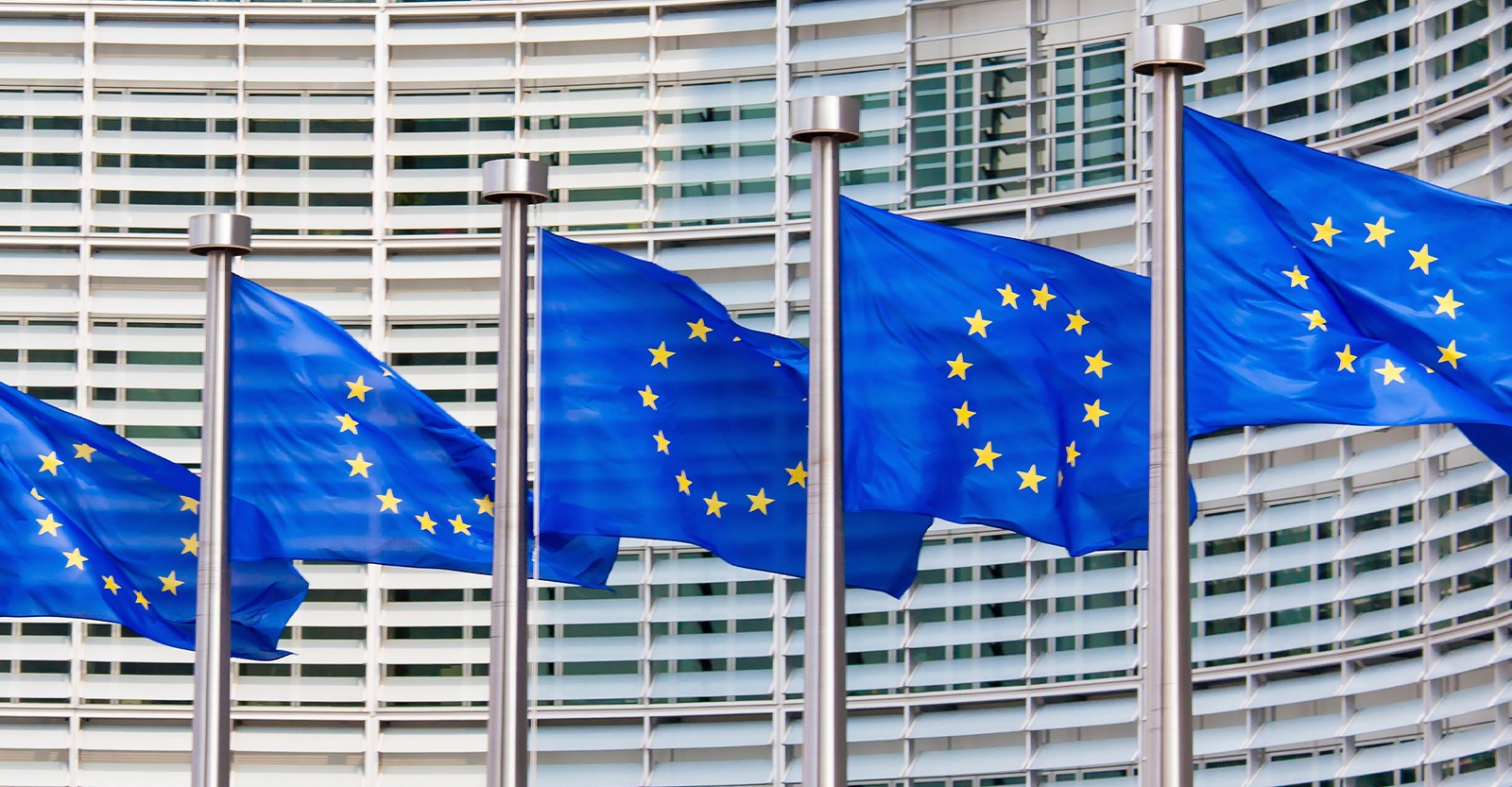
Digital Product Passports (DPP) represent a revolutionary transparency requirement. Starting in 2026, the EU mandates that companies disclose comprehensive information about product origins, materials, manufacturing processes, and environmental impacts. Each product receives a digital identity containing this information, accessible via QR codes or NFC tags.
This way, consumers can verify sustainability claims instantly, making greenwashing virtually impossible. Companies with genuinely sustainable practices gain competitive advantages. On the other hand, non-compliance risks market bans in the EU — a powerful enforcement mechanism given Europe's market size.
Fashion and electronics industries face particularly tough challenges here. Digital passports must detail material sources, working conditions, chemical usage, and end-of-life recycling options. H&M and Zara are piloting comprehensive DPP systems, recognizing that transparency will reshape competitive dynamics.
Closing Sustainability Loopholes
Organizations like the Science Based Targets initiative (SBTi) are eliminating loopholes in corporate climate commitments. SBTi's Net-Zero Standard V2 requires verifiable zero-carbon electricity by 2026 for companies claiming net-zero commitments. This removes the practice of claiming renewable energy credentials through unbundled energy certificates while actually consuming fossil fuel electricity.
Food companies face enhanced transparency requirements regarding agricultural practices, supply chain emissions, and deforestation. Unilever, Nestlé, and Danone are setting up comprehensive supply chain tracking systems. Blockchain technology is increasingly used to create immutable records of agricultural product origins and handling.
Trend #3: Solar PV Establishes Global Energy Dominance
Solar PV technology has emerged as the leader in the global energy transition, growing at a pace that consistently exceeds even optimistic projections.
Record-Breaking Growth Trajectory
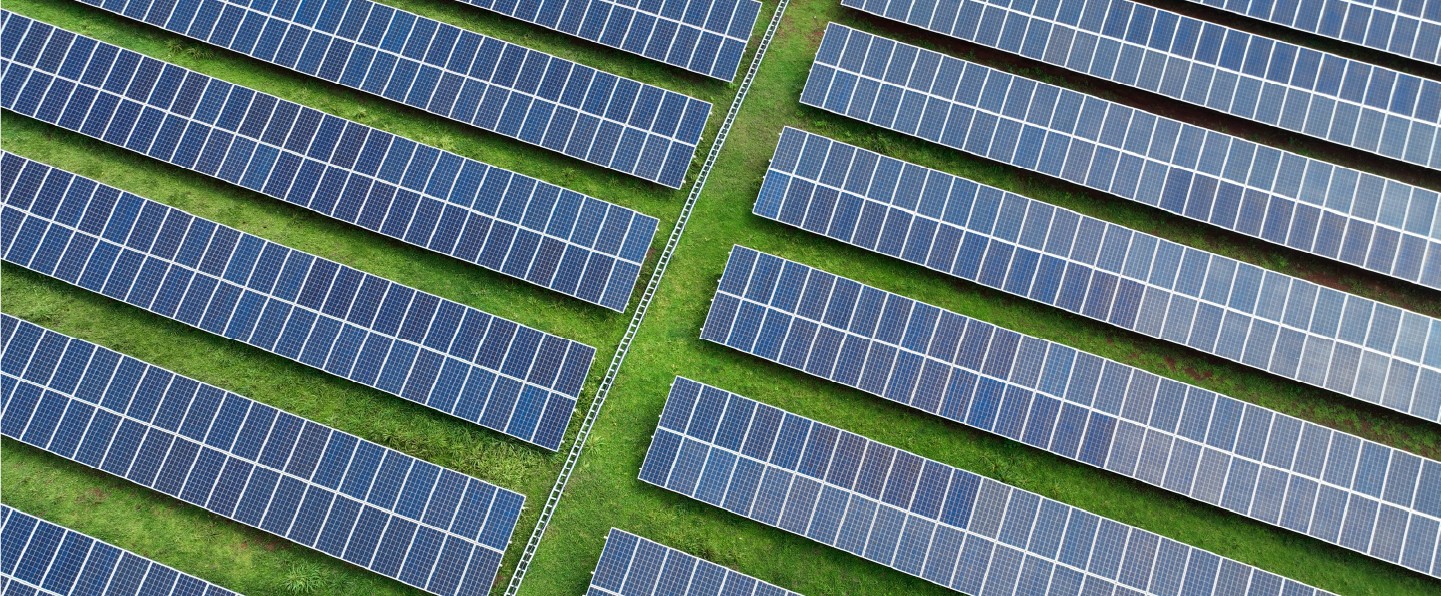
Solar PV is showing the fastest growth in energy history. Global installations reached 655 gigawatts in 2025, pushing total installed capacity to 2.2 terawatts worldwide. To put this in perspective: that single is more generating capacity than the entire nuclear power capacity of the U.S. The cumulative 2.2 TW could theoretically power over 500 million homes.
Dramatic cost reductions have made solar the cheapest source of electricity in most markets. The levelized cost of energy (LCOE) for utility-scale solar has fallen over 90% since 2010. In sunny regions like the Middle East, India, and parts of the American Southwest, solar power now costs less than $20 per megawatt-hour — cheaper than any other energy source in history.
China dominates the solar industry with over 60% of new capacity globally. However, other significant markets are emerging. India is expanding solar infrastructure as part of its commitment to 500 GW of renewable capacity by 2030. The EU has sped up solar deployment across member states. Even traditionally fossil-fuel-dependent Gulf States are investing in solar, with Saudi Arabia and the UAE building some of the world's largest solar farms.
Capital Flows and Strategic Positioning
Clean energy investments reached $450B for solar alone in 2025, double the fossil fuel investment levels. This reflects not just environmental consciousness but economic calculations. Investors recognize that solar assets offer predictable, long-term returns without fuel price volatility or stranded asset risk.
Major energy companies are repositioning their portfolios accordingly. BP, Shell, and TotalEnergies have all announced massive investments in solar projects. Even ExxonMobil, long resistant to renewable energy, has begun investing in solar technology development.
This positioned solar PV as the key effort for global decarbonization. The International Energy Agency's pathway to net-zero emissions by 2050 depends heavily on solar, requiring installations to continue at current rates or speed up. Solar's scalability — from rooftop systems to gigawatt-scale farms — makes it capable of meeting this challenge.
Grid Integration Challenges
This issue has emerged as the primary constraint on solar expansion. The grid infrastructure in most countries was designed for centralized generation from large fossil fuel plants, not distributed generation from millions of solar installations. This creates stability issues, particularly in regions with high solar penetration.
Battery storage goes hand in hand with solar expansion. Tesla's Powerwall for residential applications and CATL's utility-scale battery systems address network stability by storing excess generation during peak production hours. Australia's Hornsdale Power Reserve, using Tesla Megapack batteries, shows utility-scale storage's effectiveness.
Grid reinforcement requires massive investment. The American Society of Civil Engineers estimates the U.S. alone needs over $600B in infrastructure upgrades to accommodate projected renewable energy capacity. Europe faces similar challenges, with cross-border transmission capacity limiting renewable energy trading between countries.
Trend #4: Precision Technology Optimizes Resource Management
Data-driven approaches are changing resource management across sectors, from agriculture to energy distribution, allowing efficiency increases previously unattainable.
Smart Agriculture and Water Conservation
Precision agriculture uses sensor networks and AI analytics to optimize resource usage. DHT11 temperature and humidity sensors and capacitive soil moisture sensors provide real-time monitoring of growing conditions. IoT connectivity shares this data to cloud where AI determines optimal irrigation, fertilization, and pest management strategies.
The water savings are especially high. Traditional irrigation applies water on fixed schedules regardless of actual need. Precision systems deliver it only when and where plants need it, reducing consumption by 30-50% while often improving yields. This is key in water-stressed regions where agriculture consumes 70% of freshwater resources.
John Deere's autonomous tractors use GPS, computer vision, and AI to optimize operations. These systems plant seeds at precisely optimal spacing and depth, apply fertilizers only where soil analysis indicates deficiency, and harvest crops at peak ripeness. The result is higher yields with lower environmental impact.

Mobile Renewable Energy Solutions
Portable solar units are bringing renewable energy to locations where traditional grid can’t reach. These systems prove particularly valuable in emerging markets where grid infrastructure is limited or unreliable.
Mining companies use portable solar to power remote extraction operations without building expensive transmission lines. Humanitarian organizations deploy them for refugee camps and disaster response. Island communities use them to reduce dependence on expensive fuel generators.
Modern portable units integrate battery storage, backup generators for reliability, and smart grid capabilities. They can work alongside existing power sources, providing renewable energy when available while maintaining backup capacity. Winch Energy's Rapid Power Unit (RPU) systems deliver 500 kilowatts to 4 megawatts of mobile solar generation for industrial applications, disaster relief, and remote communities.
AI-Enhanced Forecasting and Grid Management
AI forecasting is significantly improving renewable energy integration and climate prediction accuracy. Open Climate Fix, using Google DeepMind's AI systems, increased solar generation forecasting accuracy by 40%. This allows grid operators to better balance supply and demand, reducing the need for fossil fuel backup generation.
Improved weather prediction directly impacts renewable energy economics. More accurate forecasting lets energy traders optimize asset portfolios, reducing financial risk. Utilities can plan maintenance schedules around predicted generation patterns. Grid operators can position resources more efficiently to handle renewable energy variability.
Climate modeling has similar benefits. AI can process vast datasets of atmospheric and water measurements and historical patterns to generate increasingly accurate long-term climate projections. These inform infrastructure planning, agricultural strategies, and policy decisions. The National Oceanic and Atmospheric Administration (NOAA) uses AI to improve hurricane prediction with earlier warnings and more accurate forecasts.
Looking Ahead
Success in 2026 requires recognizing that sustainability is no longer just about values — it's a business imperative driven by economics, regulation, and consumer expectations.
At Brightgrove, we specialize in developing software solutions that power the transition to renewable energy. If you're planning your next project in this niche, we'd love to discuss how we can help you capitalize on these industry trends and build a more sustainable future.
Sources
Frontiers in Plant Science. (2025). Integration of smart sensors and IOT in precision agriculture: trends, challenges and future prospectives
Garden Media. 2026 garden trends report.
Hicorenergy. (2025). Top 8 Battery Energy Storage System Suppliers in 2025
IEA PVPS. Trends in photovoltaic applications 2025.
IRENA and CPI. (2025). Global landscape of energy transition finance 2025.
KPMG. (2025). Grocery 2035: key trends, consumer shifts, and what it means for grocery.
Mintel. 2026 global food and drink predictions.
Open Climate Fix. (2025). AI-Based Weather Forecasting is Enabling the Renewable Energy Transition
Rina. (2025). Digital Product Passport (DPP): impact on companies, obligations, and strategic opportunities
Spherical Insights. (2025). World's Top 50 Companies in Off-grid Solar PV Panel in 2025 Watch List: Statistics Report (2024-2035).
SURF. (2025). SURF tech trends 2026.
Trend Hunter. 2026 trend report.
WPP Media. (2025). Advertising in 2030.
The shift to clean energy evolved from aspiration to an inevitable reality. The proof is in the numbers: investments in this sector reached a record $2.4T in 2024. Solar photovoltaic (PV) technology becomes dominant, regulatory frameworks introduce transparency and accountability, and precision technologies optimize resource management at scale.
We’ve gathered the most relevant renewable energy previsions for 2026 and beyond.
Trend #1: Green Computing Tackles Digital Infrastructure's Footprint
As computing demands surge, the tech industry faces its environmental impact with unprecedented urgency. Data centers now consume approximately 1-2% of global electricity, and AI model training can emit as much carbon as five cars over their lifetimes.
Optimizing AI Energy Consumption
Energy-efficient AI is key to sustainable computing. Data centers are implementing optimized hardware architectures and advanced cooling systems to reduce energy consumption. Google DeepMind's AI-driven temperature management system cut cooling energy requirements by 40% across Google's data center portfolio. The system adjusts cooling based on weather conditions, workload distributions, and equipment efficiency.
Chip manufacturers are redesigning processors for energy efficiency. NVIDIA's latest GPU architectures deliver significantly more computational power per watt than previous generations. Apple's M-series chips demonstrate that high performance and energy efficiency can go hand in hand. Specialized AI chips from companies like Cerebras and Graphcore optimize workloads, consuming less energy than general-purpose processors.
Software optimization matters just as much, compounding hardware efficiency gains. Researchers are developing more efficient AI training algorithms that achieve similar results with fewer computational cycles. Model compression techniques reduce energy requirements without sacrificing accuracy.
Cloud Providers Lead Renewable Transition
Renewable operations have become standard for major cloud providers. Amazon Web Services now runs 90% of workloads on renewable energy, having invested billions in wind and solar projects globally. AWS is on track to power operations entirely with renewables, making it the largest corporate buyer of renewable energy worldwide.
Microsoft Azure has achieved carbon-negative operations, meaning the company removes more carbon from the atmosphere than it emits. This means going beyond just renewable energy with sustainability features like liquid cooling, waste heat recovery, and rainwater harvesting in Microsoft’s data centers.
Google claims to operate the cleanest cloud in the industry, matching 100% of electricity consumption with renewable energy purchases since 2017. The company is targeting 24/7 carbon-free energy. This means every data center always running on clean energy to eliminate the fossil fuel consumption that occurs when solar and wind aren't generating.
Smart Energy Management Beyond Data Centers
Smart energy management extends to our day-to-day lives. New-gen smart thermostats deliver real-time optimization based on multiple factors: climate conditions, time-of-use electricity pricing, renewable energy availability on the grid, and predicted occupancy.
AI-powered thermostats from Nest, Ecobee, and others learn occupancy patterns, weather forecasts, and energy pricing to minimize consumption while maintaining comfort. Some systems can participate in demand response programs, slightly adjusting temperature settings during peak demand periods in exchange for lower electricity rates.
Smart home integration amplifies these benefits. Systems coordinate HVAC, lighting, and appliance operation to minimize energy consumption. For example, pre-cooling homes using solar energy generated at midday is cheaper than running air conditioning during evening peak hours.
Trend #2: Mandatory Sustainability and Transparency Regulations
The era of voluntary sustainability is ending with mandatory regulations that enforce environmental accountability through specific targets and disclosure requirements.
Net-Zero Requirements Become Law
Net-zero mandates are becoming legally binding obligations. Governments worldwide are legislating carbon-neutral operations requirements with specific timelines and penalties for non-compliance. The EU's Corporate Sustainability Reporting Directive (CSRD) requires large companies to report detailed emissions data and reduction plans, with external auditing to prevent greenwashing.
Corporate responses vary in ambition and credibility. eBay has committed to net-zero emissions by 2045, with targets requiring 90% absolute emissions reductions across its value chain. To go further, eBay is electrifying logistics, requiring suppliers to meet sustainability standards, and redesigning packaging to minimize environmental impact.
Amazon's Climate Pledge commits to net-zero carbon by 2040, driving massive investments in electric delivery vehicles and renewable energy. Microsoft has committed to being carbon-negative by 2030 and removing all historical emissions by 2050. The company is investing in carbon removal technologies, renewable energy projects, and sustainable material science.
Digital Product Passports Transform Transparency
Digital Product Passports (DPP) represent a revolutionary transparency requirement. Starting in 2026, the EU mandates that companies disclose comprehensive information about product origins, materials, manufacturing processes, and environmental impacts. Each product receives a digital identity containing this information, accessible via QR codes or NFC tags.
This way, consumers can verify sustainability claims instantly, making greenwashing virtually impossible. Companies with genuinely sustainable practices gain competitive advantages. On the other hand, non-compliance risks market bans in the EU — a powerful enforcement mechanism given Europe's market size.
Fashion and electronics industries face particularly tough challenges here. Digital passports must detail material sources, working conditions, chemical usage, and end-of-life recycling options. H&M and Zara are piloting comprehensive DPP systems, recognizing that transparency will reshape competitive dynamics.
Closing Sustainability Loopholes
Organizations like the Science Based Targets initiative (SBTi) are eliminating loopholes in corporate climate commitments. SBTi's Net-Zero Standard V2 requires verifiable zero-carbon electricity by 2026 for companies claiming net-zero commitments. This removes the practice of claiming renewable energy credentials through unbundled energy certificates while actually consuming fossil fuel electricity.
Food companies face enhanced transparency requirements regarding agricultural practices, supply chain emissions, and deforestation. Unilever, Nestlé, and Danone are setting up comprehensive supply chain tracking systems. Blockchain technology is increasingly used to create immutable records of agricultural product origins and handling.
Trend #3: Solar PV Establishes Global Energy Dominance
Solar PV technology has emerged as the leader in the global energy transition, growing at a pace that consistently exceeds even optimistic projections.
Record-Breaking Growth Trajectory
Solar PV is showing the fastest growth in energy history. Global installations reached 655 gigawatts in 2025, pushing total installed capacity to 2.2 terawatts worldwide. To put this in perspective: that single is more generating capacity than the entire nuclear power capacity of the U.S. The cumulative 2.2 TW could theoretically power over 500 million homes.
Dramatic cost reductions have made solar the cheapest source of electricity in most markets. The levelized cost of energy (LCOE) for utility-scale solar has fallen over 90% since 2010. In sunny regions like the Middle East, India, and parts of the American Southwest, solar power now costs less than $20 per megawatt-hour — cheaper than any other energy source in history.
China dominates the solar industry with over 60% of new capacity globally. However, other significant markets are emerging. India is expanding solar infrastructure as part of its commitment to 500 GW of renewable capacity by 2030. The EU has sped up solar deployment across member states. Even traditionally fossil-fuel-dependent Gulf States are investing in solar, with Saudi Arabia and the UAE building some of the world's largest solar farms.
Capital Flows and Strategic Positioning
Clean energy investments reached $450B for solar alone in 2025, double the fossil fuel investment levels. This reflects not just environmental consciousness but economic calculations. Investors recognize that solar assets offer predictable, long-term returns without fuel price volatility or stranded asset risk.
Major energy companies are repositioning their portfolios accordingly. BP, Shell, and TotalEnergies have all announced massive investments in solar projects. Even ExxonMobil, long resistant to renewable energy, has begun investing in solar technology development.
This positioned solar PV as the key effort for global decarbonization. The International Energy Agency's pathway to net-zero emissions by 2050 depends heavily on solar, requiring installations to continue at current rates or speed up. Solar's scalability — from rooftop systems to gigawatt-scale farms — makes it capable of meeting this challenge.
Grid Integration Challenges
This issue has emerged as the primary constraint on solar expansion. The grid infrastructure in most countries was designed for centralized generation from large fossil fuel plants, not distributed generation from millions of solar installations. This creates stability issues, particularly in regions with high solar penetration.
Battery storage goes hand in hand with solar expansion. Tesla's Powerwall for residential applications and CATL's utility-scale battery systems address network stability by storing excess generation during peak production hours. Australia's Hornsdale Power Reserve, using Tesla Megapack batteries, shows utility-scale storage's effectiveness.
Grid reinforcement requires massive investment. The American Society of Civil Engineers estimates the U.S. alone needs over $600B in infrastructure upgrades to accommodate projected renewable energy capacity. Europe faces similar challenges, with cross-border transmission capacity limiting renewable energy trading between countries.
Trend #4: Precision Technology Optimizes Resource Management
Data-driven approaches are changing resource management across sectors, from agriculture to energy distribution, allowing efficiency increases previously unattainable.
Smart Agriculture and Water Conservation
Precision agriculture uses sensor networks and AI analytics to optimize resource usage. DHT11 temperature and humidity sensors and capacitive soil moisture sensors provide real-time monitoring of growing conditions. IoT connectivity shares this data to cloud where AI determines optimal irrigation, fertilization, and pest management strategies.
The water savings are especially high. Traditional irrigation applies water on fixed schedules regardless of actual need. Precision systems deliver it only when and where plants need it, reducing consumption by 30-50% while often improving yields. This is key in water-stressed regions where agriculture consumes 70% of freshwater resources.
John Deere's autonomous tractors use GPS, computer vision, and AI to optimize operations. These systems plant seeds at precisely optimal spacing and depth, apply fertilizers only where soil analysis indicates deficiency, and harvest crops at peak ripeness. The result is higher yields with lower environmental impact.
Mobile Renewable Energy Solutions
Portable solar units are bringing renewable energy to locations where traditional grid can’t reach. These systems prove particularly valuable in emerging markets where grid infrastructure is limited or unreliable.
Mining companies use portable solar to power remote extraction operations without building expensive transmission lines. Humanitarian organizations deploy them for refugee camps and disaster response. Island communities use them to reduce dependence on expensive fuel generators.
Modern portable units integrate battery storage, backup generators for reliability, and smart grid capabilities. They can work alongside existing power sources, providing renewable energy when available while maintaining backup capacity. Winch Energy's Rapid Power Unit (RPU) systems deliver 500 kilowatts to 4 megawatts of mobile solar generation for industrial applications, disaster relief, and remote communities.
AI-Enhanced Forecasting and Grid Management
AI forecasting is significantly improving renewable energy integration and climate prediction accuracy. Open Climate Fix, using Google DeepMind's AI systems, increased solar generation forecasting accuracy by 40%. This allows grid operators to better balance supply and demand, reducing the need for fossil fuel backup generation.
Improved weather prediction directly impacts renewable energy economics. More accurate forecasting lets energy traders optimize asset portfolios, reducing financial risk. Utilities can plan maintenance schedules around predicted generation patterns. Grid operators can position resources more efficiently to handle renewable energy variability.
Climate modeling has similar benefits. AI can process vast datasets of atmospheric and water measurements and historical patterns to generate increasingly accurate long-term climate projections. These inform infrastructure planning, agricultural strategies, and policy decisions. The National Oceanic and Atmospheric Administration (NOAA) uses AI to improve hurricane prediction with earlier warnings and more accurate forecasts.
Looking Ahead
Success in 2026 requires recognizing that sustainability is no longer just about values — it's a business imperative driven by economics, regulation, and consumer expectations.
At Brightgrove, we specialize in developing software solutions that power the transition to renewable energy. If you're planning your next project in this niche, we'd love to discuss how we can help you capitalize on these industry trends and build a more sustainable future.
Sources
Frontiers in Plant Science. (2025). Integration of smart sensors and IOT in precision agriculture: trends, challenges and future prospectives
Garden Media. 2026 garden trends report.
Hicorenergy. (2025). Top 8 Battery Energy Storage System Suppliers in 2025
IEA PVPS. Trends in photovoltaic applications 2025.
IRENA and CPI. (2025). Global landscape of energy transition finance 2025.
KPMG. (2025). Grocery 2035: key trends, consumer shifts, and what it means for grocery.
Mintel. 2026 global food and drink predictions.
Open Climate Fix. (2025). AI-Based Weather Forecasting is Enabling the Renewable Energy Transition
Rina. (2025). Digital Product Passport (DPP): impact on companies, obligations, and strategic opportunities
Spherical Insights. (2025). World's Top 50 Companies in Off-grid Solar PV Panel in 2025 Watch List: Statistics Report (2024-2035).
SURF. (2025). SURF tech trends 2026.
Trend Hunter. 2026 trend report.
WPP Media. (2025). Advertising in 2030.
The shift to clean energy evolved from aspiration to an inevitable reality. The proof is in the numbers: investments in this sector reached a record $2.4T in 2024. Solar photovoltaic (PV) technology becomes dominant, regulatory frameworks introduce transparency and accountability, and precision technologies optimize resource management at scale.
We’ve gathered the most relevant renewable energy previsions for 2026 and beyond.
Trend #1: Green Computing Tackles Digital Infrastructure's Footprint
As computing demands surge, the tech industry faces its environmental impact with unprecedented urgency. Data centers now consume approximately 1-2% of global electricity, and AI model training can emit as much carbon as five cars over their lifetimes.
Optimizing AI Energy Consumption
Energy-efficient AI is key to sustainable computing. Data centers are implementing optimized hardware architectures and advanced cooling systems to reduce energy consumption. Google DeepMind's AI-driven temperature management system cut cooling energy requirements by 40% across Google's data center portfolio. The system adjusts cooling based on weather conditions, workload distributions, and equipment efficiency.
Chip manufacturers are redesigning processors for energy efficiency. NVIDIA's latest GPU architectures deliver significantly more computational power per watt than previous generations. Apple's M-series chips demonstrate that high performance and energy efficiency can go hand in hand. Specialized AI chips from companies like Cerebras and Graphcore optimize workloads, consuming less energy than general-purpose processors.
Software optimization matters just as much, compounding hardware efficiency gains. Researchers are developing more efficient AI training algorithms that achieve similar results with fewer computational cycles. Model compression techniques reduce energy requirements without sacrificing accuracy.
Cloud Providers Lead Renewable Transition
Renewable operations have become standard for major cloud providers. Amazon Web Services now runs 90% of workloads on renewable energy, having invested billions in wind and solar projects globally. AWS is on track to power operations entirely with renewables, making it the largest corporate buyer of renewable energy worldwide.
Microsoft Azure has achieved carbon-negative operations, meaning the company removes more carbon from the atmosphere than it emits. This means going beyond just renewable energy with sustainability features like liquid cooling, waste heat recovery, and rainwater harvesting in Microsoft’s data centers.
Google claims to operate the cleanest cloud in the industry, matching 100% of electricity consumption with renewable energy purchases since 2017. The company is targeting 24/7 carbon-free energy. This means every data center always running on clean energy to eliminate the fossil fuel consumption that occurs when solar and wind aren't generating.
Smart Energy Management Beyond Data Centers
Smart energy management extends to our day-to-day lives. New-gen smart thermostats deliver real-time optimization based on multiple factors: climate conditions, time-of-use electricity pricing, renewable energy availability on the grid, and predicted occupancy.
AI-powered thermostats from Nest, Ecobee, and others learn occupancy patterns, weather forecasts, and energy pricing to minimize consumption while maintaining comfort. Some systems can participate in demand response programs, slightly adjusting temperature settings during peak demand periods in exchange for lower electricity rates.
Smart home integration amplifies these benefits. Systems coordinate HVAC, lighting, and appliance operation to minimize energy consumption. For example, pre-cooling homes using solar energy generated at midday is cheaper than running air conditioning during evening peak hours.
Trend #2: Mandatory Sustainability and Transparency Regulations
The era of voluntary sustainability is ending with mandatory regulations that enforce environmental accountability through specific targets and disclosure requirements.
Net-Zero Requirements Become Law
Net-zero mandates are becoming legally binding obligations. Governments worldwide are legislating carbon-neutral operations requirements with specific timelines and penalties for non-compliance. The EU's Corporate Sustainability Reporting Directive (CSRD) requires large companies to report detailed emissions data and reduction plans, with external auditing to prevent greenwashing.
Corporate responses vary in ambition and credibility. eBay has committed to net-zero emissions by 2045, with targets requiring 90% absolute emissions reductions across its value chain. To go further, eBay is electrifying logistics, requiring suppliers to meet sustainability standards, and redesigning packaging to minimize environmental impact.
Amazon's Climate Pledge commits to net-zero carbon by 2040, driving massive investments in electric delivery vehicles and renewable energy. Microsoft has committed to being carbon-negative by 2030 and removing all historical emissions by 2050. The company is investing in carbon removal technologies, renewable energy projects, and sustainable material science.
Digital Product Passports Transform Transparency
Digital Product Passports (DPP) represent a revolutionary transparency requirement. Starting in 2026, the EU mandates that companies disclose comprehensive information about product origins, materials, manufacturing processes, and environmental impacts. Each product receives a digital identity containing this information, accessible via QR codes or NFC tags.
This way, consumers can verify sustainability claims instantly, making greenwashing virtually impossible. Companies with genuinely sustainable practices gain competitive advantages. On the other hand, non-compliance risks market bans in the EU — a powerful enforcement mechanism given Europe's market size.
Fashion and electronics industries face particularly tough challenges here. Digital passports must detail material sources, working conditions, chemical usage, and end-of-life recycling options. H&M and Zara are piloting comprehensive DPP systems, recognizing that transparency will reshape competitive dynamics.
Closing Sustainability Loopholes
Organizations like the Science Based Targets initiative (SBTi) are eliminating loopholes in corporate climate commitments. SBTi's Net-Zero Standard V2 requires verifiable zero-carbon electricity by 2026 for companies claiming net-zero commitments. This removes the practice of claiming renewable energy credentials through unbundled energy certificates while actually consuming fossil fuel electricity.
Food companies face enhanced transparency requirements regarding agricultural practices, supply chain emissions, and deforestation. Unilever, Nestlé, and Danone are setting up comprehensive supply chain tracking systems. Blockchain technology is increasingly used to create immutable records of agricultural product origins and handling.
Trend #3: Solar PV Establishes Global Energy Dominance
Solar PV technology has emerged as the leader in the global energy transition, growing at a pace that consistently exceeds even optimistic projections.
Record-Breaking Growth Trajectory
Solar PV is showing the fastest growth in energy history. Global installations reached 655 gigawatts in 2025, pushing total installed capacity to 2.2 terawatts worldwide. To put this in perspective: that single is more generating capacity than the entire nuclear power capacity of the U.S. The cumulative 2.2 TW could theoretically power over 500 million homes.
Dramatic cost reductions have made solar the cheapest source of electricity in most markets. The levelized cost of energy (LCOE) for utility-scale solar has fallen over 90% since 2010. In sunny regions like the Middle East, India, and parts of the American Southwest, solar power now costs less than $20 per megawatt-hour — cheaper than any other energy source in history.
China dominates the solar industry with over 60% of new capacity globally. However, other significant markets are emerging. India is expanding solar infrastructure as part of its commitment to 500 GW of renewable capacity by 2030. The EU has sped up solar deployment across member states. Even traditionally fossil-fuel-dependent Gulf States are investing in solar, with Saudi Arabia and the UAE building some of the world's largest solar farms.
Capital Flows and Strategic Positioning
Clean energy investments reached $450B for solar alone in 2025, double the fossil fuel investment levels. This reflects not just environmental consciousness but economic calculations. Investors recognize that solar assets offer predictable, long-term returns without fuel price volatility or stranded asset risk.
Major energy companies are repositioning their portfolios accordingly. BP, Shell, and TotalEnergies have all announced massive investments in solar projects. Even ExxonMobil, long resistant to renewable energy, has begun investing in solar technology development.
This positioned solar PV as the key effort for global decarbonization. The International Energy Agency's pathway to net-zero emissions by 2050 depends heavily on solar, requiring installations to continue at current rates or speed up. Solar's scalability — from rooftop systems to gigawatt-scale farms — makes it capable of meeting this challenge.
Grid Integration Challenges
This issue has emerged as the primary constraint on solar expansion. The grid infrastructure in most countries was designed for centralized generation from large fossil fuel plants, not distributed generation from millions of solar installations. This creates stability issues, particularly in regions with high solar penetration.
Battery storage goes hand in hand with solar expansion. Tesla's Powerwall for residential applications and CATL's utility-scale battery systems address network stability by storing excess generation during peak production hours. Australia's Hornsdale Power Reserve, using Tesla Megapack batteries, shows utility-scale storage's effectiveness.
Grid reinforcement requires massive investment. The American Society of Civil Engineers estimates the U.S. alone needs over $600B in infrastructure upgrades to accommodate projected renewable energy capacity. Europe faces similar challenges, with cross-border transmission capacity limiting renewable energy trading between countries.
Trend #4: Precision Technology Optimizes Resource Management
Data-driven approaches are changing resource management across sectors, from agriculture to energy distribution, allowing efficiency increases previously unattainable.
Smart Agriculture and Water Conservation
Precision agriculture uses sensor networks and AI analytics to optimize resource usage. DHT11 temperature and humidity sensors and capacitive soil moisture sensors provide real-time monitoring of growing conditions. IoT connectivity shares this data to cloud where AI determines optimal irrigation, fertilization, and pest management strategies.
The water savings are especially high. Traditional irrigation applies water on fixed schedules regardless of actual need. Precision systems deliver it only when and where plants need it, reducing consumption by 30-50% while often improving yields. This is key in water-stressed regions where agriculture consumes 70% of freshwater resources.
John Deere's autonomous tractors use GPS, computer vision, and AI to optimize operations. These systems plant seeds at precisely optimal spacing and depth, apply fertilizers only where soil analysis indicates deficiency, and harvest crops at peak ripeness. The result is higher yields with lower environmental impact.
Mobile Renewable Energy Solutions
Portable solar units are bringing renewable energy to locations where traditional grid can’t reach. These systems prove particularly valuable in emerging markets where grid infrastructure is limited or unreliable.
Mining companies use portable solar to power remote extraction operations without building expensive transmission lines. Humanitarian organizations deploy them for refugee camps and disaster response. Island communities use them to reduce dependence on expensive fuel generators.
Modern portable units integrate battery storage, backup generators for reliability, and smart grid capabilities. They can work alongside existing power sources, providing renewable energy when available while maintaining backup capacity. Winch Energy's Rapid Power Unit (RPU) systems deliver 500 kilowatts to 4 megawatts of mobile solar generation for industrial applications, disaster relief, and remote communities.
AI-Enhanced Forecasting and Grid Management
AI forecasting is significantly improving renewable energy integration and climate prediction accuracy. Open Climate Fix, using Google DeepMind's AI systems, increased solar generation forecasting accuracy by 40%. This allows grid operators to better balance supply and demand, reducing the need for fossil fuel backup generation.
Improved weather prediction directly impacts renewable energy economics. More accurate forecasting lets energy traders optimize asset portfolios, reducing financial risk. Utilities can plan maintenance schedules around predicted generation patterns. Grid operators can position resources more efficiently to handle renewable energy variability.
Climate modeling has similar benefits. AI can process vast datasets of atmospheric and water measurements and historical patterns to generate increasingly accurate long-term climate projections. These inform infrastructure planning, agricultural strategies, and policy decisions. The National Oceanic and Atmospheric Administration (NOAA) uses AI to improve hurricane prediction with earlier warnings and more accurate forecasts.
Looking Ahead
Success in 2026 requires recognizing that sustainability is no longer just about values — it's a business imperative driven by economics, regulation, and consumer expectations.
At Brightgrove, we specialize in developing software solutions that power the transition to renewable energy. If you're planning your next project in this niche, we'd love to discuss how we can help you capitalize on these industry trends and build a more sustainable future.
Sources
Frontiers in Plant Science. (2025). Integration of smart sensors and IOT in precision agriculture: trends, challenges and future prospectives
Garden Media. 2026 garden trends report.
Hicorenergy. (2025). Top 8 Battery Energy Storage System Suppliers in 2025
IEA PVPS. Trends in photovoltaic applications 2025.
IRENA and CPI. (2025). Global landscape of energy transition finance 2025.
KPMG. (2025). Grocery 2035: key trends, consumer shifts, and what it means for grocery.
Mintel. 2026 global food and drink predictions.
Open Climate Fix. (2025). AI-Based Weather Forecasting is Enabling the Renewable Energy Transition
Rina. (2025). Digital Product Passport (DPP): impact on companies, obligations, and strategic opportunities
Spherical Insights. (2025). World's Top 50 Companies in Off-grid Solar PV Panel in 2025 Watch List: Statistics Report (2024-2035).
SURF. (2025). SURF tech trends 2026.
Trend Hunter. 2026 trend report.
WPP Media. (2025). Advertising in 2030.
Denys Novyk
Senior Project Manager
10+ years of experience in project and product management. Delivered complex SaaS and digital products, including AI-driven and enterprise solutions, while building strong client partnerships globally. Has a proven track record in product development and end-to-end delivery in Renewable Energy, E-commerce & Retail, and Engineering & Manufacturing.
Related content
Related content
Discover related stories and news.
Discover related stories and news.

9 minutes to read
Real Estate Trends for 2026: Industry Outlook
The real estate industry is changing more than ever. Traditional property types are being redefined, AI is becoming an operational backbone.
The real estate industry is changing more than ever. Traditional property types are being redefined, AI is becoming an operational backbone.

8 minutes to read
Hospitality Trends for 2026: Industry Outlook
The hospitality sector's confidence is at its highest point since before the pandemic, with 85% of operators optimistic about the industry's direction.
The hospitality sector's confidence is at its highest point since before the pandemic, with 85% of operators optimistic about the industry's direction.

9 minutes to read
Finance Trends for 2026: Industry Outlook
The financial services industry is experiencing one of its most significant transformations in decades. This isn't just digitalization — it's a complete change of how money moves.
The financial services industry is experiencing one of its most significant transformations in decades. This isn't just digitalization — it's a complete change of how money moves.
© 2026 Brightgrove. All rights reserved.
© 2026 Brightgrove. All rights reserved.
© 2026 Brightgrove. All rights reserved.
© 2026 Brightgrove. All rights reserved.